Anyone who knows me, knows that I don’t take kindly to the notion of mindlessly following rules, or that anything could be set in stone. I went to Berkeley, for God’s sake – “Question Authority” isn’t just a bumper sticker to us, it’s our life’s work.
It follows, then, that preparing something straight from a recipe is just not what I do. I can’t. It’s not in me. So it was weird to find myself in the kitchen, printout from the New York Times food section in hand, trying to make myself do exactly what the recipe author (the highly-regarded Martha Rose Shulman) said to do.
I didn’t succeed, of course; I made a few changes that suit me, my tastebuds & my pantry better than Ms. Shulman’s written instructions. But I have a good reason – I’m checking out a couple of new ingredients I have on hand. One is a new preparation of olives that I want to play with, Olivasecca Dry Pitted Olives from Penna Olives, way up the Sacramento Valley in Orland, CA.

Penna’s Olivasecca Dry Pitted Olives, prepped for the recipe
The other, Costco’s house brand Kirkland Canned Chunk Light Skipjack Tuna, guaranteed to be only skipjack tuna caught by purse seine – a sustainable method of harvesting wild tuna that is listed as a “Best Choice” in Monterey Bay Aquarium’s Seafood Watch app.
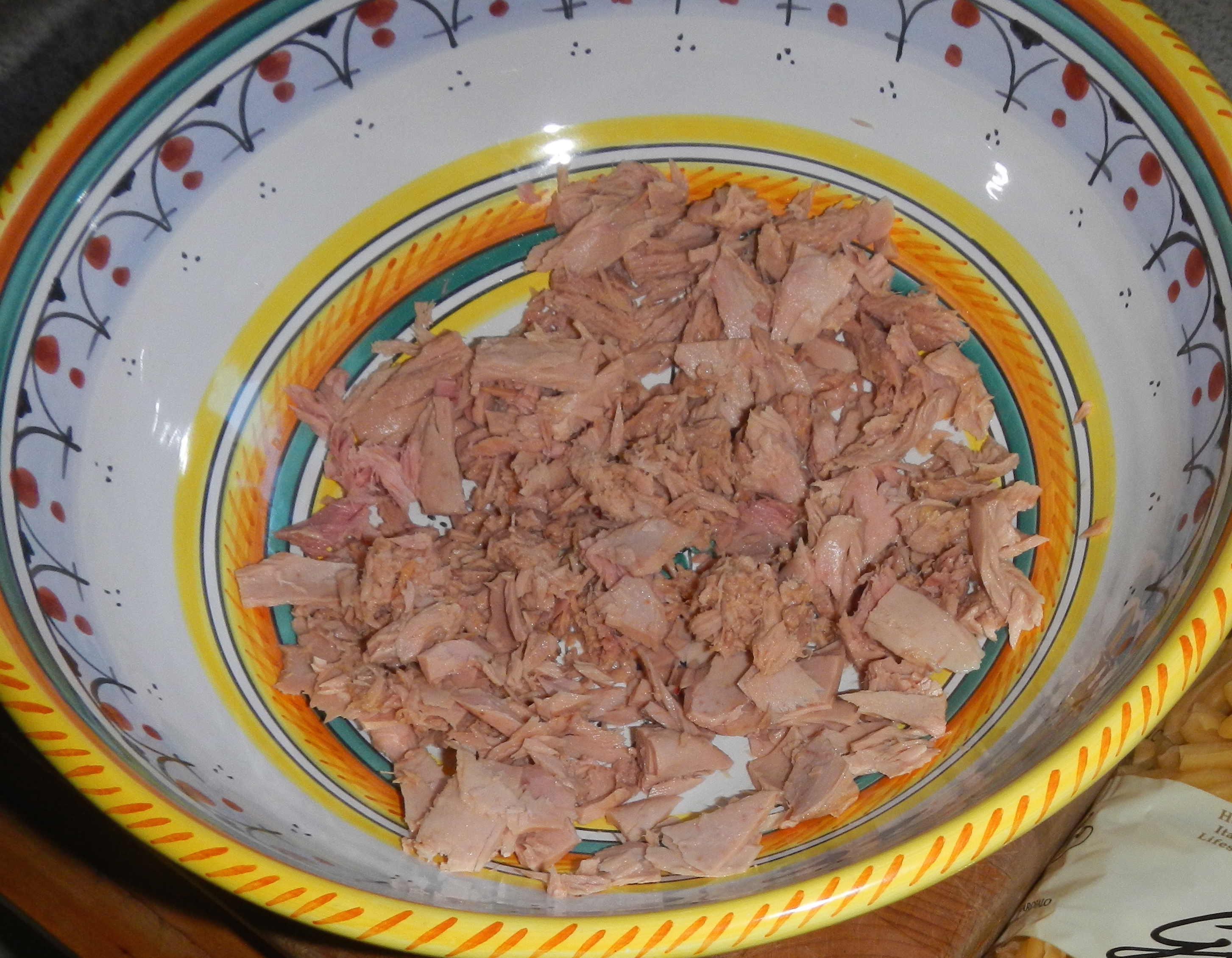
I must say, Costco’s skipjack tuna is a lot nicer looking than some of the mushy & unappealing supermarket brands I’ve used (can you hear me, Chicken of the Sea?!). Breaks up into firm, handsome flakes.
Because it’s not the season to be making fresh tomato sauce (unless I want to buy tomatoes from the southern hemisphere, which I most definitely do not), Kirkland Marinara Sauce, which is also new to me.
[Yes, I do a lot of my grocery shopping at Costco. For the low prices, naturally, but also because I can get good organic ingredients & a few well-made prepared foods there. I don’t normally use much prepared stuff, but face it, some things – like good-quality canned beans, marinara, frozen fish, canned tuna – are handy to have around for those days when you just don’t feel like cooking dinner 100% fresh-from-scratch. I’ll dive deeper into this topic in a later post.]
And for good measure, nonpareil capers, because… well, because I can’t follow a recipe to save my life. It’s boring. So for today, my take on Martha Rose Shulman’s Pasta with Tuna & Olives. Easy, delicious, & fast enough for a weeknight meal.
Pasta With Tuna, Capers & Dried Olives
(adapted from http://cooking.nytimes.com/recipes/1016459-pasta-with-tuna-and-olives)
Ingredients:
• 1 7-oz can chunk light skipjack tuna in water, drained
• 2 tablespoons nonpareil capers, drained
• 2 generous tablespoons extra virgin olive oil
• 2 cloves garlic, minced
• 2 c. marinara sauce
• 5 or 6 sprigs of fresh Italian parsley, minced
• 1/2 tsp. dried red pepper flakes (optional for Ms Shulman, not optional at my house)
• 1/2 c. Penna Olivasecca Dry Pitted Olives – I cut about half of them in half to distribute the flavor, & left the other half as whole dried olives for the decadent way whole olives look in a sauce.
• 12 oz. organic Italian pasta – use a shape that will catch & hold the sauce. I’m using organic penne from the bulk food department at Berkeley Bowl.
• Freshly grated Parmesan
Preparation:
1. Put a big pot of water on to boil for your pasta.
2. In a large pasta bowl (time to get out the Deruta pottery!), break up the tuna.
3. Heat olive oil in a small saucepan over medium heat; add garlic & cook until fragrant – like, 30 seconds to a minute at the very most. Add to the tuna along with the parsley & capers; stir to combine, & set aside.

4. Add marinara to the saucepan, heat through & season to taste – this Costco sauce didn’t need anything other than a twist of freshly-ground black pepper. Add red pepper flakes & olives, & simmer a couple of minutes to infuse the sauce with olive flavor & heat from the chiles. Set aside.
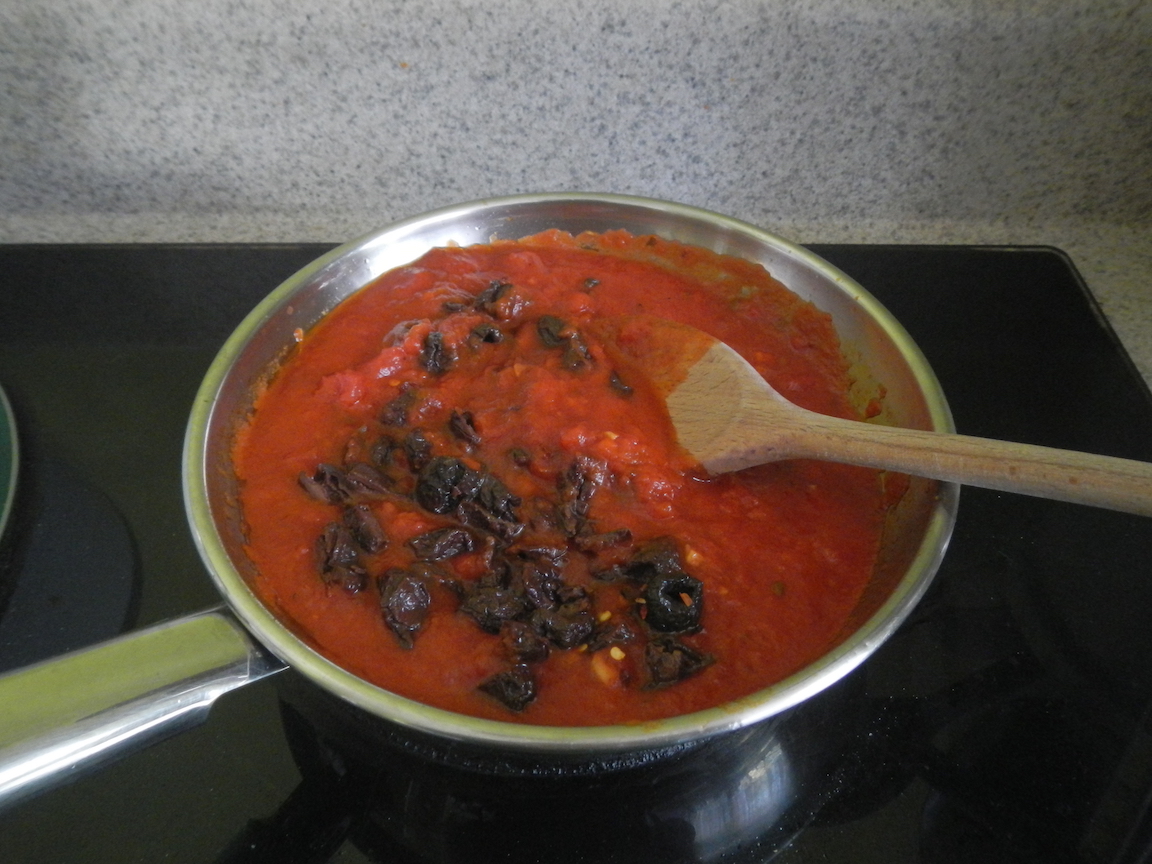
5. When the water is boiling, add a heaping tablespoon of salt & the pasta. Cook until al dente. Drain, reserving 2 or 3 tablespoons of pasta water. Add reserved water to tuna mixture & stir.
6. Transfer drained pasta to the bowl. Add tomato sauce, toss everything together & serve. Pass freshly grated Parmesan at the table.
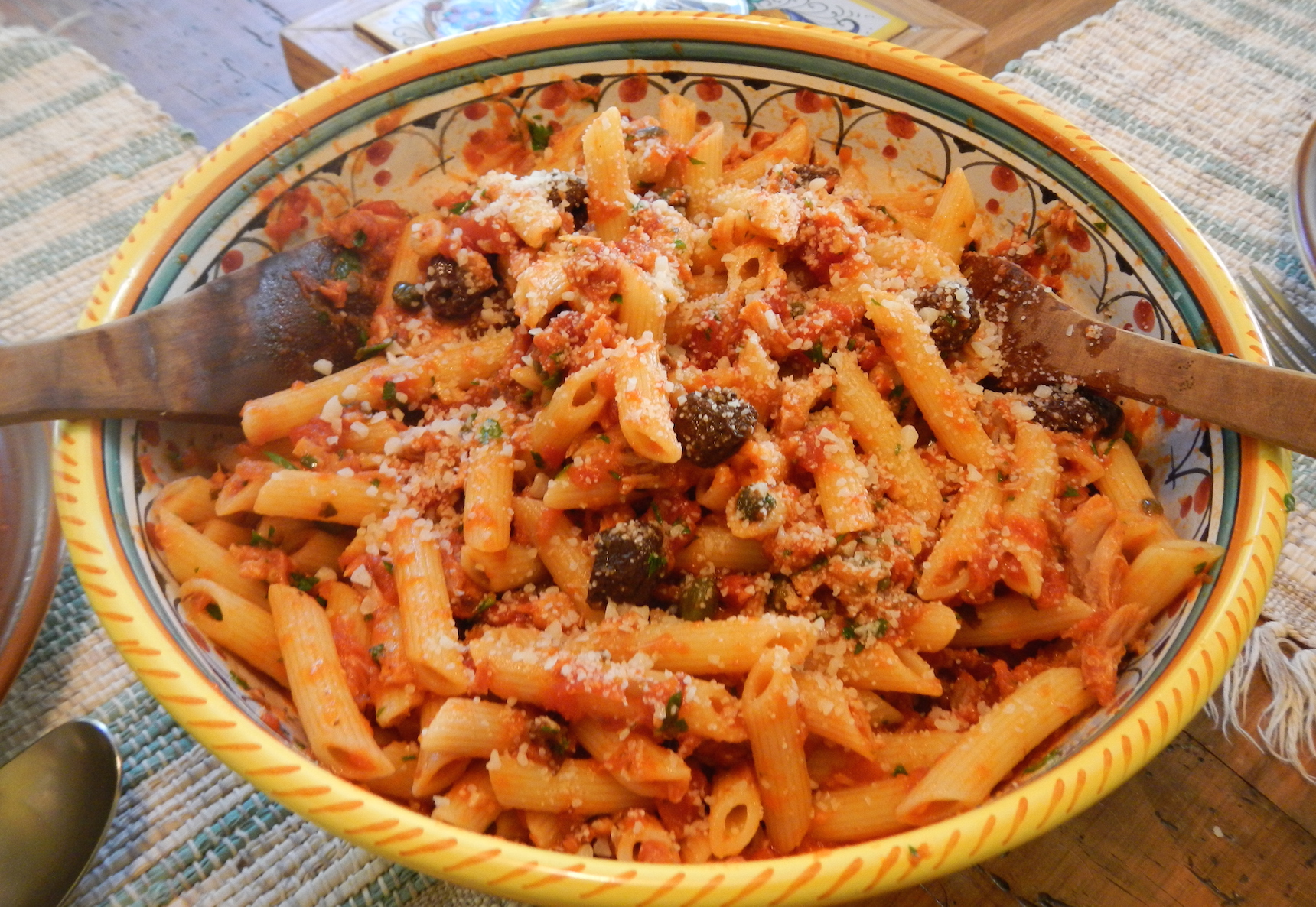
Yup. This one’s a keeper. The dried olives are also a keeper, a new pantry staple that I’ll be happy to keep on hand : https://www.greatolives.com/buy-gourmet-olives/index.php?route=product/product&path=44_59&product_id=52




 grounded in Marin